For years, the unreliable narrator has been one of crime fiction’s most polarizing devices. Readers argue over fairness. Critics debate whether the trope has been overused. And yet, as publishers roll out their 2026 catalogs, one thing is unmistakable: narrative uncertainty is not fading. In fact, I’d argue it’s becoming more sophisticated.
What’s emerging isn’t just the classic unreliable narrator who lies outright. Instead, publishers are leaning into psychologically opaque narration—stories where truth is distorted through emotional bias, limited perception, fragmented timelines, or structural withholding. These books don’t always announce their unreliability. They let it surface gradually, forcing readers to question not only what happened, but how they came to believe it.
Across major releases scheduled throughout 2026, this approach shows up again and again. Some novels rely on fractured memory or competing points of view. Others center on emotionally convincing narrators whose sincerity masks omission. Together, they point to an industry-wide shift: thrillers that challenge trust without relying solely on last-page reversals.
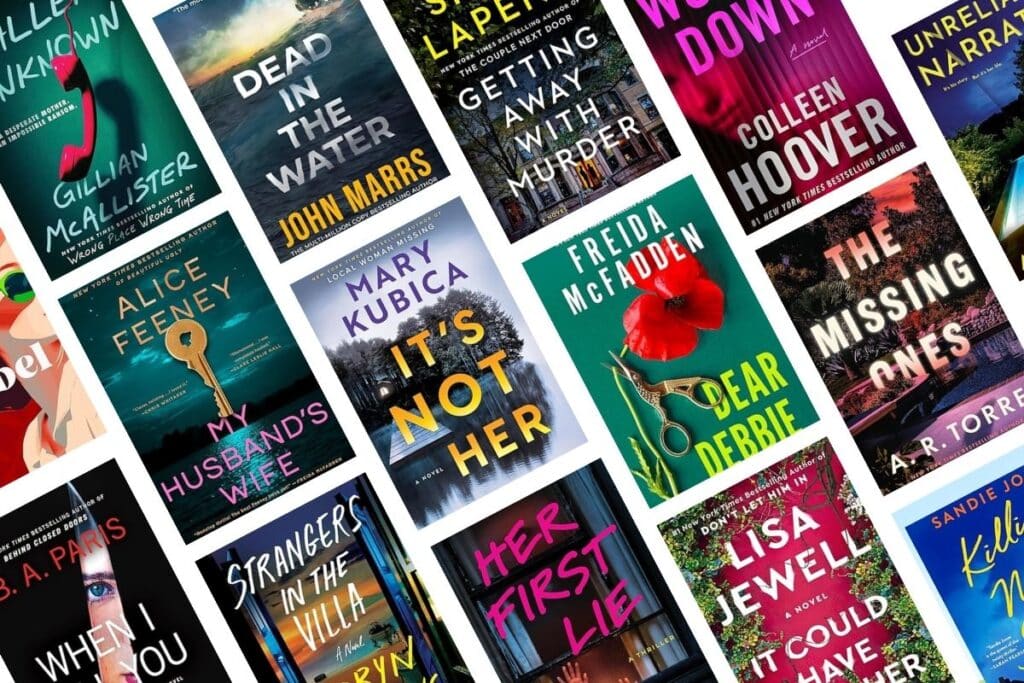
Several forthcoming titles illustrate how publishers are refining, rather than abandoning, this narrative strategy. Here are some of the best 2026 Thrillers Built on Unreliable or Psychologically Opaque Narration:
- Woman Down by Colleen Hoover (January 13, 2026): Hoover continues her move into darker psychological territory, using emotional bias rather than outright deception to shape the story. The narrator’s version of events feels authentic, even persuasive—until readers begin to sense that the emotional and factual truths may not align.
- Dead in the Water by John Marrs (January 20, 2026): Marrs employs situational unreliability, fragmenting truth across multiple perspectives and technological constraints. No single narrator controls the narrative, leaving readers to assemble reality from partial, often conflicting information.
- My Husband’s Wife by Alice Feeney (January 20, 2026): Feeney’s trademark use of omission drives the suspense here, with psychological opacity emerging through memory gaps, motivation, and carefully controlled revelation rather than overt lies.
- Dear Debbie by Freida McFadden (January 27, 2026): McFadden leans into selective disclosure, crafting a narrator whose emotional interpretation of events feels sincere but incomplete. The unreliability unfolds quietly, through what is left unsaid.
- It’s Not Her by Mary Kubica (February 3, 2026): Kubica centers the story on perspective distortion, where limited information and emotional misinterpretation shape reader assumptions long before the truth becomes clear.
- When I Kill You by B.A. Paris (February 17, 2026): Paris uses tightly controlled point of view to withhold key context, allowing psychological opacity to build through proximity and trust rather than narrative trickery.
- Strangers in the Villa by Robyn Harding (March 3, 2026): Harding destabilizes the narrative through shifting domestic power dynamics, where familiarity itself becomes a source of misjudgment and false certainty.
- Killing Me Softly by Sandie Jones (March 31, 2026): Emotional misdirection anchors this thriller, with unreliability rooted in relationships, desire, and the stories characters tell themselves to justify what they want.
- The Missing Ones by A.R. Torre (April 14, 2026): Torre blends structural fragmentation with moral ambiguity, challenging readers to question not just the narrator’s truth, but the framework through which the story is delivered.
- Mad Mabel by Sally Hepworth (April 21, 2026): Hepworth explores psychological opacity through character-driven misperception, allowing the narrator’s internal logic to guide the story—even when it leads readers astray.
- Her First Lie by Lucinda Berry (April 21, 2026): Trauma-based unreliability shapes the narrative here, where repression and survival instincts influence what can be acknowledged, remembered, or spoken.
- Caller Unknown by Gillian McAllister (May 5, 2026): Time pressure and incomplete information create situational unreliability, where urgency itself distorts perception and decision-making.
- The Anniversary by Alex Finlay (May 12, 2026): Ensemble narration and withheld histories produce a layered uncertainty, as contradictions between perspectives gradually surface.
- Unreliable Narrator by Araminta Hall (July 14, 2026): Hall approaches unreliability with rare transparency, foregrounding the mechanics of self-deception rather than using misdirection as a surprise tactic. The narration invites readers to observe how emotional rationalization, memory editing, and narrative framing shape perception in real time, making the instability of the account part of the story’s architecture rather than its twist.
- Getting Away with Murder by Shari Lapena (July 28, 2026): Lapena returns to her strength: multiple partial truths colliding inside a closed domestic system, where no single account can be trusted fully.
- It Could Have Been Her by Lisa Jewell (July 23, 2026): Jewell’s forthcoming novel continues her exploration of psychological opacity, where emotional intuition and factual certainty exist in uneasy tension.
- The Unknown by Riley Sager (August 4, 2026): Sager’s work often centers on memory gaps and identity uncertainty, and early signals suggest this release will again challenge the stability of perspective and recollection.
Together, these titles suggest that unreliability in 2026 is focused on sustained doubt.
Publishers appear confident that readers are willing to navigate stories where certainty is deferred, truth is provisional, and trust must be earned rather than assumed.
As thrillers continue to mirror a culture grappling with fractured information and competing realities, unreliable and psychologically opaque narration is no longer a risky choice. It’s becoming the norm.

Thalia Mercer is a writer covering mystery and thriller fiction, with a focus on book-to-screen adaptations and contemporary reading culture. She writes about why certain stories resonate—and how they translate beyond the page.