Behind every gasp, sleepless night, and just-one-more chapter moment in thriller fiction lies a secret weapon–the trope.
Crime fiction and psychological thrillers have long captivated readers with their tension, atmosphere, and mystery. Yet beneath the suspense, it’s actually the trope that compels readers to stick around until the last twist.
Far from being mere clichés, tropes form the invisible architecture of the genre. They are the recurring beats that shape narratives, heighten drama, and deliver the familiar jolt of anticipation that makes thrillers so compulsive. And yes, I’ll admit it: the unreliable narrator gets me every time.
Authors know this well. The most skilled embrace tropes not as shortcuts, but as tools, twisting them in ways that feel both shocking and inevitable. Patterns, repeated across novels and decades, are not signs of unoriginality. Instead, they are evidence of something deeper–a shared language between writer and reader, one that taps into universal fears and desires. And when I spot a trope being subverted, I can’t help but admire the craft. It’s the moment I know I’m in the hands of a master storyteller.
There are countless tropes in crime and thriller fiction, but a select few rise above the rest. They entertain and get under the skin, stirring unease and excitement in equal measure. They are the reason readers whisper just one more chapter long after midnight.
What follows is a closer look at the most addictive tropes in the genre. It’s the narrative devices that continue to define, disrupt, and enthrall.
The Unreliable Narrator
When truth itself becomes slippery, the unreliable narrator forces readers to question every word. This trope thrives on psychological tension, making us doubt not only the story but our own instincts. It’s a favorite of authors like these, who use it to keep audiences perpetually off balance:
- The Housemaid (Freida McFadden): a domestic thriller where perception and reality collide.
- Gone Girl (Gillian Flynn): the modern classic of unreliable narration, redefining the trope for a new generation.
- Sometimes I Lie (Alice Feeney): a chilling tale where every confession feels suspect.
The Locked Room Mystery
The locked room mystery is a puzzle that feels impossible to solve. The claustrophobic setting and limited suspects create a pressure cooker of suspense. The who-done-it can’t be overdone. Bring on authors like:
- And Then There Were None (Agatha Christie): the definitive locked‑room mystery, still unmatched in tension.
- The Woman in Cabin 10 (Ruth Ware): a modern spin on isolation and suspicion aboard a luxury cruise.
- The Brutal Telling (Louise Penny): a village mystery that traps readers in its intricate web of secrets.
The Double Life
The new neighbor, the charming mentor, the person who arrives at the exact wrong (or right) time. The double life reveals ordinary characters hiding extraordinary secrets. The shock of hidden identities fuels both surprise and empathy, reminding us how fragile appearances can be. Writers like the following excel at weaving these dualities into their plots.
- The Couple Next Door (Shari Lapena): a suburban thriller where appearances mask devastating truths.
- Then She Was Gone (Lisa Jewell): a story of hidden lives and haunting secrets.
- Pretty Girls (Karin Slaughter): a brutal, layered thriller exposing the darkness behind family facades.
The Cat‑and‑Mouse Chase
In the cat-and-mouse chase relentless pursuit raises the stakes. Whether detective vs. criminal or victim vs. predator, this trope keeps adrenaline high and pages turning. The tension lies in the near misses, the clever evasions, and the inevitable showdown between hunter and hunted. Authors who excel at this pulse‑pounding dynamic include:
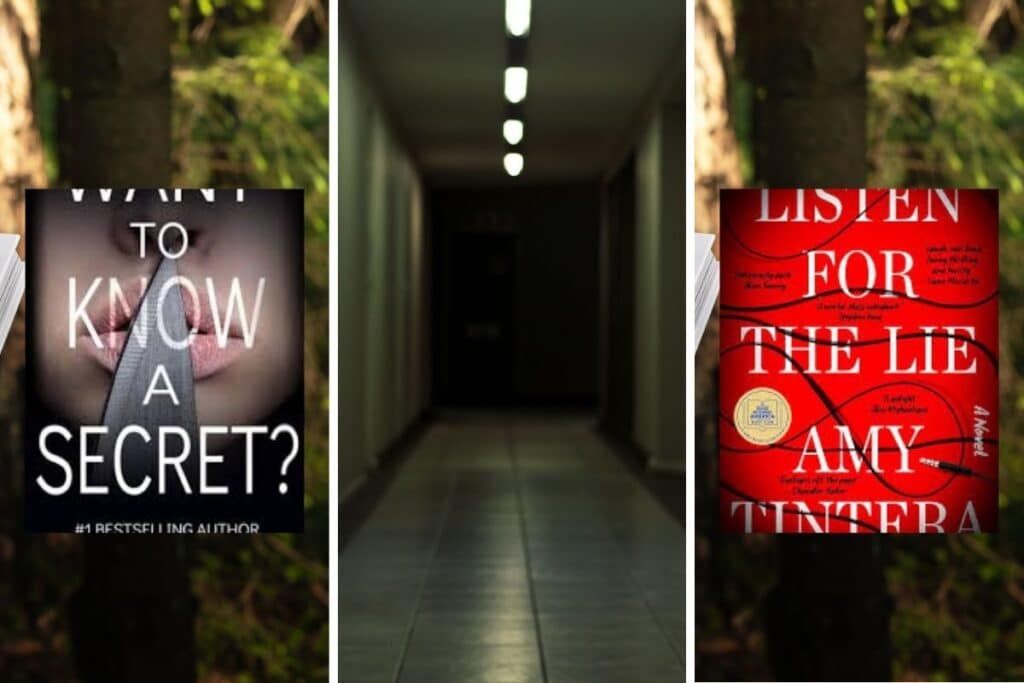
- Listen for the Lie (Amy Tintera): a gripping thriller where the final revelation forces readers to question everything they thought they knew.
- My Sister, the Serial Killer (Oyinkan Braithwaite): a sharp, darkly comic chase between loyalty and morality.
- The Murder House (James Patterson): a relentless thriller where secrets and pursuit intertwine in a small town
The Twist Ending
You know it’s coming, but you just can’t put your finger on it. The twist ending is the revelation that changes everything. Done well, it’s the payoff that makes readers gasp, rethink the entire narrative, and immediately recommend the book. A twist isn’t just surprise for surprise’s sake, and it’s the moment that reframes the entire story and lingers long after the last page. Writers renowned for jaw‑dropping finales include:
- The Girl on the Train (Paula Hawkins): a psychological puzzle that turns perception inside out.
- You Killed Me First (John Marrs): a gripping thriller where the final reveal reshapes everything you thought you knew about three neighbors.
- Love, Mom (Iliana Xander): a chilling family thriller where hidden secrets unravel into a shocking final twist.
Conclusion: Turn Tropes Into Tools
Thriller tropes aren’t just devices on a writer’s shelf. No, they’re signals to readers about what kind of ride they’re about to take. The more you recognize them, the more you’ll understand your own reading style. Do you crave the psychological tension of an unreliable narrator? Or the intellectual puzzle of a locked‑room mystery? Maybe it’s the adrenaline of a cat‑and‑mouse chase that keeps you up past midnight.
By paying attention to the tropes that consistently thrill you, you’ll start to see patterns in your own ratings. The books you call “five stars” often share the same narrative DNA. Spotting those beats early in blurbs, reviews, or opening chapters can help you choose stories that match your taste and avoid ones that fall flat.
But here’s the paradox: the more you read, the more you’ll start to recognize trends and even predict where a plot is heading. While that’s part of the fun, it’s also a reminder to slow down. Instead of racing to the twist, savor the craft. Notice how the author builds tension, plants clues, and bends familiar tropes into something fresh. The real reward is more than just guessing the ending. Learn to appreciate the journey that gets you there.

Thalia Mercer is a writer covering mystery and thriller fiction, with a focus on book-to-screen adaptations and contemporary reading culture. She writes about why certain stories resonate—and how they translate beyond the page.