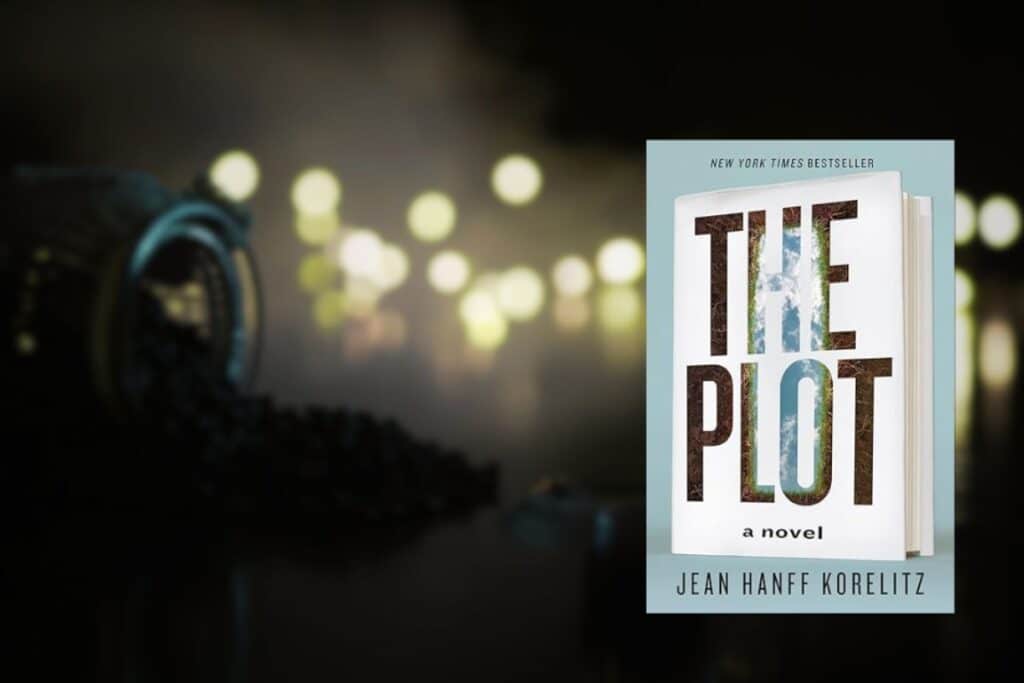
In publishing, talent matters, but timing—and luck—matter more. The Plot explores what happens when a writer on the brink of irrelevance is handed the kind of story that could resurrect his career. Jean Hanff Korelitz turns that premise into a sharp, unsettling psychological thriller about authorship, ownership, and the pressure to prove yourself in an industry obsessed with the next big thing.
It’s less about a twist and more about the unraveling of a man who thinks he’s finally beaten the system. Here’s how the story unfolds—what works, what doesn’t, and why this thriller leaves such a lingering effect.
Quick Summary (Spoiler-Free)
Jacob Finch Bonner once believed he was destined to become a great novelist. Now he’s teaching in a fading MFA program, doing little writing, and avoiding any conversation that might remind him of his stalled career.
Then he meets Evan Parker—a talented, arrogant student who insists he has a guaranteed bestseller built on an unforgettable twist. Jake knows instantly the kid is right. But when Evan dies before writing a single word, Jake does the unthinkable: he steals the idea.
His novel becomes the sensation Evan predicted—the book everyone recommends, the one with the twist people can’t stop discussing. Jake is finally successful again…until an anonymous message arrives: “You’re a thief.”
What begins as unease spirals into a psychological unraveling, as Jake slowly realizes the idea he stole may not have been fiction at all.
What Worked: Character, Psychology & Craft
What makes The Plot compelling isn’t the twist—it’s the psychology. Korelitz writes desperation incredibly well with an unnerving accuracy. Jake’s decline is slow, believable, and driven by the kind of rationalizations writers whisper to themselves in the dark.
The publishing-world details feel lived-in: The grind of MFA programs, the envy between writers, the mythology around the next big book, and the terror of irrelevance. Her long paragraphs and observational style give the novel a literary texture, even while the story stays firmly in thriller territory. It’s smartly constructed, highly readable, and emotionally precise.
The metafiction, excerpts from Jake’s stolen novel, adds a fascinating mirror effect, letting readers watch Jake succeed at something that never belonged to him..
What Didn’t Work (Non-Spoiler Critique)
One of the most discussed critiques is the way Korelitz frames Evan’s unwritten manuscript. Characters describe it as a once-in-a-generation, earth-shattering plot. A guaranteed phenomenon. The kind of story that could change a writer’s entire career.
But when readers finally see snippets of it, there’s a disconnect. The story is good but not revolutionary. And the central twist has been used many times in thriller and horror fiction before.
Some readers may also find the early pacing slow and the paragraphs heavy, but the story’s strength lies in its solid plot and the creeping tension that leads to an ending that feels more eerie than earned. The audiobook helps smooth this out, though it may feel a bit drawn-out for readers expected a more traditional psychological thriller instead of a slow-burn suspense novel.
Ending Explained: Why the Creepy, Hollow Twist Is Actually the Point (spoilers Included)
Click for spoiler
As Jake digs deeper into the origins of Evan’s unforgettable story, he discovers the unsettling truth Evan never shared: the plot was not a piece of dazzling imagination. Instead, it was a thinly veiled confession from Evan’s childhood. Earlier, his sister, Diana, murdered her teenage daughter, Maria, not out of fear or self-defense but because she envied the life Maria was about to have—college, independence, promise. Diana wanted that future for herself.
Diana staged the scene, stole her daughter’s identity, reinvented herself, and eventually became the woman Jake knows as Anna.
This is where the twist lands with an eerie thud because Diana/Anna’s motive isn’t tragic or psychologically rich—it’s selfish and disturbingly mundane. And Jake, who has spent months piecing together the truth, gets every part of the puzzle right except the last one: he never realizes the woman he loves is the woman he’s been chasing across crime reports.
The small moment when Anna asks Jake whether someone who’s done something terrible could ever be forgiven is the book’s true pivot. I’m not sure if she’s testing him but for a moment I thought Jake and her would ride off into the sunset because Jake would choose fame over morality. But instead, he answers honestly: No — not forgiven, only understood. And in that moment, Anna knows Jake can never accept her truth.
So, what feels at first like a strangely empty twist becomes far more interesting when you consider what The Plot is really about. This is not a thriller that hinges on a clever reveal. It’s a story about entitlement—the stories people feel they’re owed and the lives they are willing to take, literally or metaphorically, to reclaim a sense of relevance. It’s reality.
Jake steals Evan’s story because he believes he wants a second chance. Diana steals her daughter’s life because she wants a different future. Neither act is noble. Neither makes rational sense outside the mind of the person committing it. Both destroy everything in their wake.
And that uncomfortable parallel is the book’s real payoff. The story ends with Anna rewriting the narrative yet again—a character who understands better than Jake ever did that stories are dangerous depending on who they belong to.
Final Verdict
The Plot is a smart, psychological thriller that explores ambition, envy, and the stories people bury to protect themselves. It’s not the legendary twist the characters promise, but it doesn’t need to be. Korelitz thrives in the gray areas, where guilt and genius blur, and where the truth behind a story matters far more than the plot on the page.
If you want a thriller that examines the stories people use to justify their choices, The Plot is a gripping, thought-provoking read. Just know going in: It’s a slow burn with a quieter, more unsettling payoff than a traditional twist—yet still a rewarding and memorable read.

Thalia Mercer is a writer covering mystery and thriller fiction, with a focus on book-to-screen adaptations and contemporary reading culture. She writes about why certain stories resonate—and how they translate beyond the page.