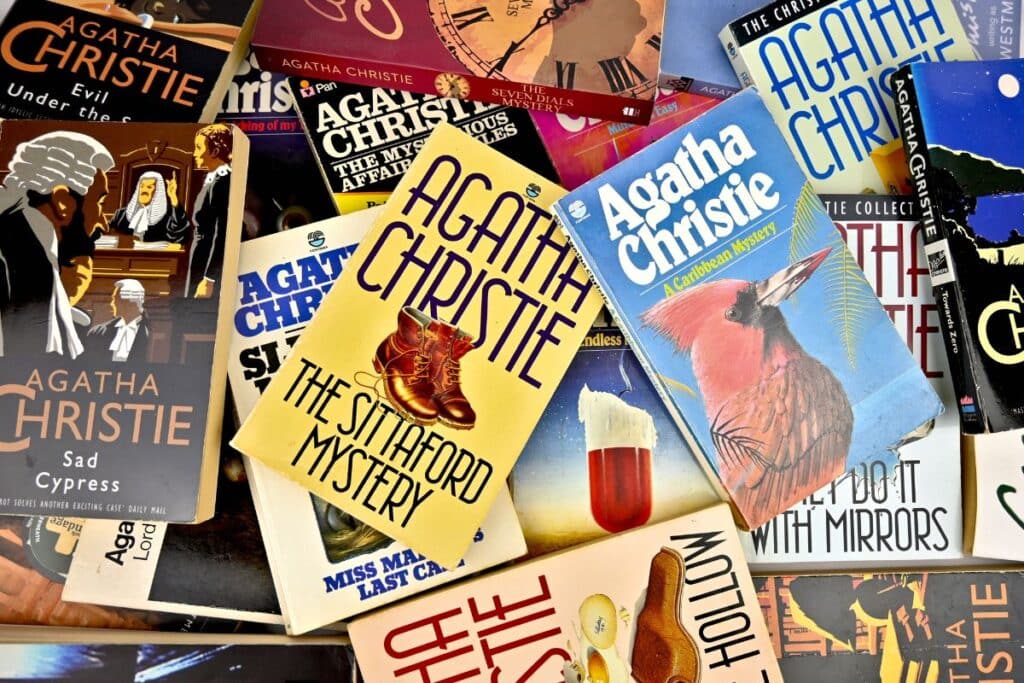
Even Agatha Christie, the queen of the whodunit, once poked fun at readers for their impossible expectations in the mystery genre. In The Mysterious Affair at Styles, Ernest Cavendish teases Mary: “I have a formula for uncovering the murderer in the early chapters. It is usually a family member, whichever one is instantly ruled out of the enquiry because he or she has a rock-solid alibi.”
The scene is Christie’s sly nod to readers forever trying to crack the code–a brilliant reminder that crime fiction is as much about storytelling as it is about solving the puzzle. Writers are always working to entertain within familiar patterns, but in truth, every story has been written; it’s the telling that makes it new. Yet, that balance between puzzle and storytelling is delicate, and when modern thrillers lean too far toward shock without setup, readers notice.
Readers love a good twist—but lately, psychological thrillers are getting the kind of feedback no author wants. TikTok commenters complain that the twist came out of nowhere. Goodreads reviews argue that endings feel rushed, chaotic, or too far-fetched. And in Facebook book groups, readers lament entire bad reading weeks after abandoning multiple thrillers in a row.
At the heart of today’s frustrations, however, is a deeper structural misunderstanding: psychological thrillers and crime fiction do not reveal information the same way. They’re built on different storytelling engines, and when readers pick up a book expecting one structure but get the other, disappointment is almost guaranteed.
The Psychological Thriller’s Big Bang
Psychological thrillers are notorious for saving their most explosive revelations until the final chapters. Authors often rely on unreliable narrators, hidden motives, or sudden reversals of perspective.
Reader complaint: “I felt cheated,” one Goodreads reviewer wrote of a recent bestseller. “The twist wasn’t earned—it was like the author pulled a rabbit out of a hat.”
Why it happens: Writers aim to shock, but when clues are too sparse, readers feel blindsided rather than thrilled.
These stories often unfold inside the protagonist’s mind: distorted memory, trauma, gaslighting, or perception gaps. Because the narrator’s version of events is compromised, the information the reader receives is compromised too. The truth cannot be revealed until the end—not because the author is manipulative, but because the character literally cannot access it.
That’s why psychological thrillers save their biggest reveals for the final chapters. The twist unlocks the narrator’s true reality.
- Sometimes I Lie withholds identity information until the final pages.
- Gone Girl uses Amy’s diary to distort the reader’s perception.
- The Woman in the Window hides the protagonist’s memory gaps from the audience.
The central question here is: Can you trust what you’re reading? And the answer, intentionally, is almost always no.
The Mystery’s Breadcrumb Trail
Mysteries, especially in the tradition of Agatha Christie or Arthur Conan Doyle, tend to scatter clues throughout the narrative. Readers are invited to play detective alongside the protagonist.
Reader complaint: “I guessed the killer halfway through,” a fan lamented on a mystery forum. “It made the rest of the book feel like waiting for the detective to catch up.”
Why it happens: Too many clues too early can sap suspense, leaving the ending predictable.
Instead of focusing inward, these stories follow an outward investigation: Who committed the crime? What is the motive? Where is the evidence? What does the timeline reveal? The reader is meant to follow along—sometimes even outsmart the detective. Examples:
- Michael Connelly’s procedurals reveal new information chapter by chapter.
- Agatha Christie gifts readers “fair-play” clues from the very beginning.
- Karin Slaughter spreads character and motive information across the entire narrative.
Here, readers don’t feel blindsided by the final reveal because they’ve been gathering evidence all along. The core question here is: Can you solve the case before the detective does? And the answer, when you read a lot of books, is an enjoyable, well-deserved yes.
Why These Genres Get Confused—and Why It Matters
In recent years, publishers have marketed psychological thrillers and crime fiction with similar cover aesthetics, taglines, and tropes. Nearly everything gets labeled gripping, dark, twisty, or unputdownable. This blending has blurred expectations between genres.
A reader picking up a psychological thriller expecting a traditional whodunit might feel:
- Misled by the lack of clues
- Frustrated by an unreliable narrator
- Annoyed when the final twist suddenly reshapes the entire story
Meanwhile, a reader expecting a psychological gut punch might find crime fiction too procedural or slow. This mismatch in expectations contributes to:
- Lower reader satisfaction
- Higher DNF (Did Not Finish) rates
- More polarized reviews (some love the twist; others hate it)
- Ongoing debates in book groups about whether thrillers are “getting worse”
The truth is: the books aren’t getting worse—readers’ expectations are getting muddied.
Conclusion: Setting Reader Expectations
Psychological thrillers weren’t designed to play fair. Crime fiction, for the most part, was. That difference doesn’t make one smarter or more complex. It simply means they rely on different formulas to deliver suspense.
If publishers labeled these genres more clearly—and if readers understood the structure behind each better—far fewer would feel disappointed. Most frustrations aren’t failures of craft. They’re failures of expectation.
Once readers know which kind of suspense they prefer, every twist lands with far more satisfaction:
- Thrillers: Expect late, dramatic twists—don’t look for constant clues.
- Mysteries: Expect a puzzle with clues sprinkled throughout—anticipate red herrings.
- Crime fiction: Expect realism and procedure—patience is part of the payoff.

Thalia Mercer is a writer covering mystery and thriller fiction, with a focus on book-to-screen adaptations and contemporary reading culture. She writes about why certain stories resonate—and how they translate beyond the page.