Open a new crime novel today, and there’s a good chance the first thing you’re told isn’t true.
It’s not a small detail, nor a harmless omission. It’s a lie that shapes everything that follows.
Sometimes it’s subtle: a narrator who frames their life as ordinary, their marriage as stable, their job as new. Other times it’s blunt like false identities, missing years, memories that don’t line up. The reader is pulled in before they realize they’ve been misled, and by the time the truth surfaces, it’s already too late to step back.
This isn’t accidental. It’s a structural shift in modern crime fiction.
Over the past decade, psychological thrillers have overtaken traditional whodunits on bestseller lists, reshaping the genre’s center of gravity. Domestic suspense, fractured-memory narratives, and true-crime influenced storytelling have pushed crime fiction inward. Instead of following detectives, readers are now embedded inside the minds of characters who are already hiding something. The opening lie has become the quickest way to signal that shift.
At its core, the lie functions as an emotional anchor. Readers invest in a narrator’s normalcy, their routine, their sense of self. When that foundation cracks, the betrayal feels personal. You weren’t just tricked—no, you were complicit. And that complicity is a powerful hook in a genre built on psychological tension.
But it also mirrors the world outside fiction.
We live in an era where truth feels unstable. Public narratives shift. Personal histories are curated. Memory itself is questioned by trauma, time, and survival instincts. Crime fiction has absorbed this anxiety and reflected it back through narrators who don’t, or can’t, tell the whole truth.
In many cases, the lie is more protective than malicious.
Characters lie to themselves to stay functional. They rewrite their past to avoid confronting guilt, grief, or complicity. When the truth finally surfaces, it isn’t just a plot twist. Really, it’s an emotional reckoning.
The strongest examples don’t use deception as a cheap trick.
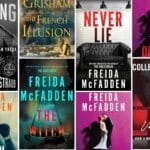
In recent psychological thrillers, the opening lie often is the character. It reveals fear, denial, or desperation long before the reader understands what’s being hidden. Authors like Gillian Flynn, John Marrs, Freida McFadden, Megan Goldin, Lisa Jewell, Alice Feeney, and Ruth Ware have mastered this approach, crafting openings that feel straightforward until the reader realizes the narrator has been guiding them down a carefully constructed path of half-truths and omission.s.
This is why some of the most effective modern crime novels feel inevitable in hindsight. The clues were there. The truth was always pressing against the edges of the story.
Of course, this technique comes with risk.
Readers are increasingly sensitive to twists that exist only to shock. When the opening lie lacks emotional logic—when it serves the plot rather than the character—it breaks trust rather than building tension.
The difference is in its intention. A meaningful lie deepens the story. A hollow one feels like a bait-and-switch. And readers know the difference.
Part of the appeal is that readers are seeking the lie. In a twist-driven reading culture, there’s a strange comfort in being deceived on purpose. The opening lie gives readers permission to surrender control. So, it promises destabilization, but in a way that’s crafted, contained, and ultimately safe.
What This Says About Crime Fiction Today
Modern crime fiction isn’t just asking what happened anymore. It’s asking:
- Who controls the story?
- What does the narrator need to believe to survive?
- How much truth can a person carry before something breaks?
The lie at the beginning isn’t intended to trick you. Rather, it’s there to serve as a warning.
You’re not here to solve a puzzle from the outside. You’re here to live inside a distorted reality until it corrects itself or shatters completely.
And once you know that, you read the first page very differently. You start looking for the fracture line. You anticipate the moment the story turns on itself. You expect the truth to arrive late, heavy, and earned. And, you begin to look forward to a first line hook that shocks you.

Thalia Mercer is a writer covering mystery and thriller fiction, with a focus on book-to-screen adaptations and contemporary reading culture. She writes about why certain stories resonate—and how they translate beyond the page.